Our Three Step Process
December 30, 2025
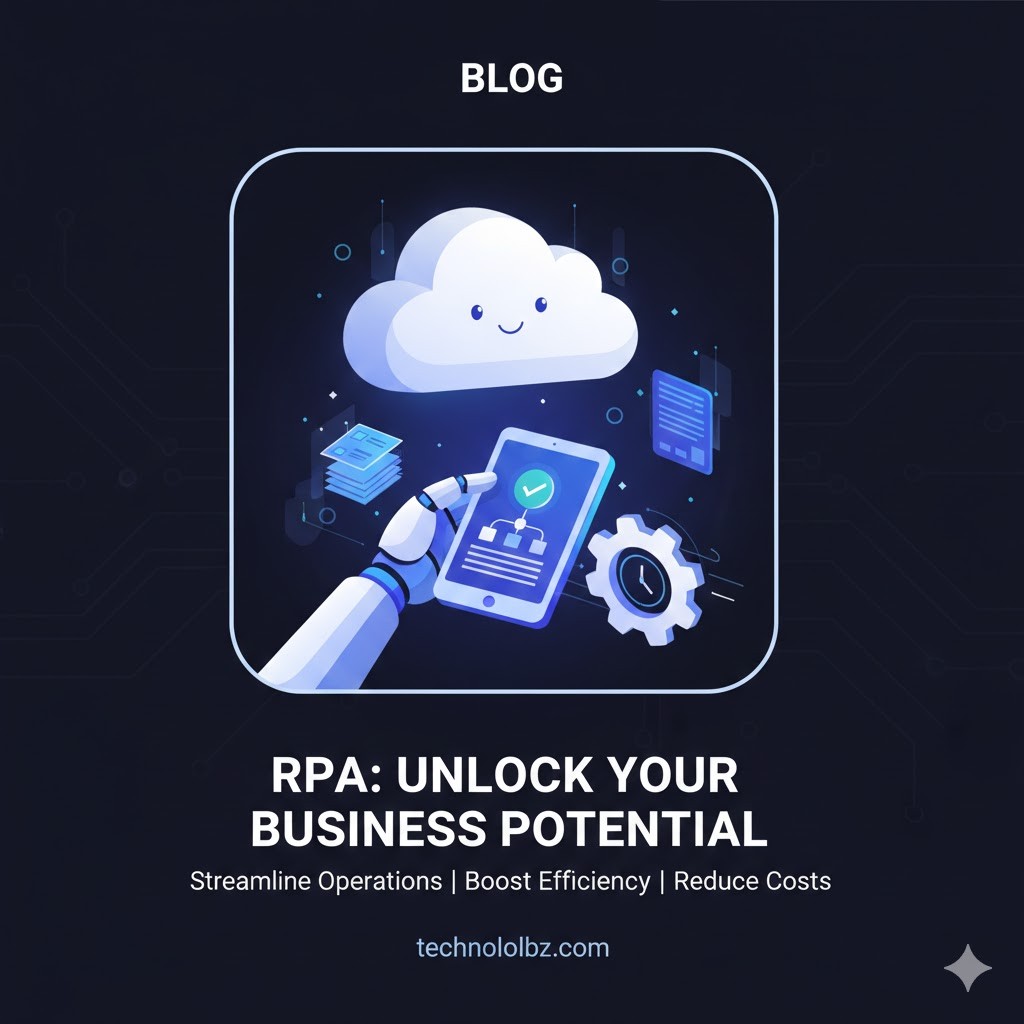
The Future of Efficiency: A Deep Dive into RPA for Websites
Our Three Step Process
December 30, 2025
The Future of Efficiency: A Deep Dive into RPA for Websites
Explore how Robotic Process Automation (RPA) is redefining web-based workflows. From eliminating manual data entry to bridging legacy systems, learn how digital workers are enabling teams to move past repetitive tasks and focus on high-impact strategic growth."
In this blog post, we'll explore detail information about RPA
In the modern enterprise, we often find ourselves caught in the 'friction' of the digital age: the hours spent manually moving data between browser tabs, updating portals, or reconciling web-based reports. While technology was promised to simplify our lives, these repetitive tasks often become the very bottlenecks that stifle innovation.
Robotic Process Automation (RPA) offers a sophisticated solution to this challenge. By deploying intelligent software agents to handle the "heavy lifting" of rule-based tasks, organizations can finally bridge the gap between their disparate online tools. This isn’t just about speed; it’s about reclaiming human creativity by delegating the mundane to a digital workforce that operates with tireless precision.
Key RPA Tools for Your Business Needs
In this blog post, we’ll explore some of the top RPA platforms and provide guidance on selecting the best tool for your organization’s unique requirements.
Ui Path: The Enterprise Leader
Overview: Ui Path remains the gold standard for enterprise-grade automation. In 2026, it has evolved into an "Agentic Automation" platform, where bots don't just follow steps but can assist in discovering new workflows through AI.
Key Features: Includes Autopilot for AI-assisted building and Document Understanding for processing unstructured data like hand-written invoices or complex contracts.
Benefits: Ideal for large-scale organizations that require a high degree of governance, security, and the ability to scale thousands of bots simultaneously.
Microsoft Power Automate: The Integrated Choice
Overview: Part of the Microsoft 365 ecosystem, this tool is the go-to for companies already embedded in the Microsoft stack. It is designed to empower "citizen developers" (non-technical staff) to build their own automations.
Key Features: Native integration with Excel, Teams, and SharePoint, along with "Desktop flows" that record and replay human actions on any website.
Benefits: Offers the lowest barrier to entry and a highly competitive pricing model, making it perfect for democratizing automation across departments.
Automation Anywhere: Cloud-Native Intelligence
Overview: A pioneer in web-based RPA, this platform is built entirely in the cloud, allowing for rapid deployment without the need for heavy on-premise infrastructure.
Key Features: Their IQ Bot uses integrated AI to handle semi-structured data, while their Discovery Bot automatically identifies the best processes to automate by observing user behavior.
Benefits: Best suited for agile businesses that prioritize cloud-first strategies and require advanced analytics to track bot performance in real-time.
SS&C Blue Prism: The Governance Expert
Overview: Known for its focus on the "Digital Workforce," Blue Prism is built for high-security environments. It is often the preferred choice for banking, healthcare, and government sectors.
Key Features: Exceptional audit trails and centralized control rooms. It excels at "unattended" automation, where bots run in the background on secure servers without human intervention.
Benefits: Ideal for businesses in highly regulated industries where compliance and security are non-negotiable.
Conclusion: Choosing Your Path Forward
Choosing the right RPA tool is essential for businesses looking to optimize their content and improve their operational agility. Whether you opt for the robust, AI-powered ecosystem of UiPath or the seamless integration of Microsoft Power Automate, the goal remains the same: eliminating the "robotic" work from human roles.
By considering factors like your current software ecosystem, technical expertise, and long-term scalability, you can select a tool that doesn't just automate tasks—it transforms your culture. By leveraging the right digital workers, businesses can uncover new growth opportunities, enhance their customer experience, and achieve a truly modern, automated enterprise.
In this blog post, we'll explore detail information about RPA
In the modern enterprise, we often find ourselves caught in the 'friction' of the digital age: the hours spent manually moving data between browser tabs, updating portals, or reconciling web-based reports. While technology was promised to simplify our lives, these repetitive tasks often become the very bottlenecks that stifle innovation.
Robotic Process Automation (RPA) offers a sophisticated solution to this challenge. By deploying intelligent software agents to handle the "heavy lifting" of rule-based tasks, organizations can finally bridge the gap between their disparate online tools. This isn’t just about speed; it’s about reclaiming human creativity by delegating the mundane to a digital workforce that operates with tireless precision.
Key RPA Tools for Your Business Needs
In this blog post, we’ll explore some of the top RPA platforms and provide guidance on selecting the best tool for your organization’s unique requirements.
Ui Path: The Enterprise Leader
Overview: Ui Path remains the gold standard for enterprise-grade automation. In 2026, it has evolved into an "Agentic Automation" platform, where bots don't just follow steps but can assist in discovering new workflows through AI.
Key Features: Includes Autopilot for AI-assisted building and Document Understanding for processing unstructured data like hand-written invoices or complex contracts.
Benefits: Ideal for large-scale organizations that require a high degree of governance, security, and the ability to scale thousands of bots simultaneously.
Microsoft Power Automate: The Integrated Choice
Overview: Part of the Microsoft 365 ecosystem, this tool is the go-to for companies already embedded in the Microsoft stack. It is designed to empower "citizen developers" (non-technical staff) to build their own automations.
Key Features: Native integration with Excel, Teams, and SharePoint, along with "Desktop flows" that record and replay human actions on any website.
Benefits: Offers the lowest barrier to entry and a highly competitive pricing model, making it perfect for democratizing automation across departments.
Automation Anywhere: Cloud-Native Intelligence
Overview: A pioneer in web-based RPA, this platform is built entirely in the cloud, allowing for rapid deployment without the need for heavy on-premise infrastructure.
Key Features: Their IQ Bot uses integrated AI to handle semi-structured data, while their Discovery Bot automatically identifies the best processes to automate by observing user behavior.
Benefits: Best suited for agile businesses that prioritize cloud-first strategies and require advanced analytics to track bot performance in real-time.
SS&C Blue Prism: The Governance Expert
Overview: Known for its focus on the "Digital Workforce," Blue Prism is built for high-security environments. It is often the preferred choice for banking, healthcare, and government sectors.
Key Features: Exceptional audit trails and centralized control rooms. It excels at "unattended" automation, where bots run in the background on secure servers without human intervention.
Benefits: Ideal for businesses in highly regulated industries where compliance and security are non-negotiable.
Conclusion: Choosing Your Path Forward
Choosing the right RPA tool is essential for businesses looking to optimize their content and improve their operational agility. Whether you opt for the robust, AI-powered ecosystem of UiPath or the seamless integration of Microsoft Power Automate, the goal remains the same: eliminating the "robotic" work from human roles.
By considering factors like your current software ecosystem, technical expertise, and long-term scalability, you can select a tool that doesn't just automate tasks—it transforms your culture. By leveraging the right digital workers, businesses can uncover new growth opportunities, enhance their customer experience, and achieve a truly modern, automated enterprise.
Explore how Robotic Process Automation (RPA) is redefining web-based workflows. From eliminating manual data entry to bridging legacy systems, learn how digital workers are enabling teams to move past repetitive tasks and focus on high-impact strategic growth."
In this blog post, we'll explore detail information about RPA
In the modern enterprise, we often find ourselves caught in the 'friction' of the digital age: the hours spent manually moving data between browser tabs, updating portals, or reconciling web-based reports. While technology was promised to simplify our lives, these repetitive tasks often become the very bottlenecks that stifle innovation.
Robotic Process Automation (RPA) offers a sophisticated solution to this challenge. By deploying intelligent software agents to handle the "heavy lifting" of rule-based tasks, organizations can finally bridge the gap between their disparate online tools. This isn’t just about speed; it’s about reclaiming human creativity by delegating the mundane to a digital workforce that operates with tireless precision.
Key RPA Tools for Your Business Needs
In this blog post, we’ll explore some of the top RPA platforms and provide guidance on selecting the best tool for your organization’s unique requirements.
Ui Path: The Enterprise Leader
Overview: Ui Path remains the gold standard for enterprise-grade automation. In 2026, it has evolved into an "Agentic Automation" platform, where bots don't just follow steps but can assist in discovering new workflows through AI.
Key Features: Includes Autopilot for AI-assisted building and Document Understanding for processing unstructured data like hand-written invoices or complex contracts.
Benefits: Ideal for large-scale organizations that require a high degree of governance, security, and the ability to scale thousands of bots simultaneously.
Microsoft Power Automate: The Integrated Choice
Overview: Part of the Microsoft 365 ecosystem, this tool is the go-to for companies already embedded in the Microsoft stack. It is designed to empower "citizen developers" (non-technical staff) to build their own automations.
Key Features: Native integration with Excel, Teams, and SharePoint, along with "Desktop flows" that record and replay human actions on any website.
Benefits: Offers the lowest barrier to entry and a highly competitive pricing model, making it perfect for democratizing automation across departments.
Automation Anywhere: Cloud-Native Intelligence
Overview: A pioneer in web-based RPA, this platform is built entirely in the cloud, allowing for rapid deployment without the need for heavy on-premise infrastructure.
Key Features: Their IQ Bot uses integrated AI to handle semi-structured data, while their Discovery Bot automatically identifies the best processes to automate by observing user behavior.
Benefits: Best suited for agile businesses that prioritize cloud-first strategies and require advanced analytics to track bot performance in real-time.
SS&C Blue Prism: The Governance Expert
Overview: Known for its focus on the "Digital Workforce," Blue Prism is built for high-security environments. It is often the preferred choice for banking, healthcare, and government sectors.
Key Features: Exceptional audit trails and centralized control rooms. It excels at "unattended" automation, where bots run in the background on secure servers without human intervention.
Benefits: Ideal for businesses in highly regulated industries where compliance and security are non-negotiable.
Conclusion: Choosing Your Path Forward
Choosing the right RPA tool is essential for businesses looking to optimize their content and improve their operational agility. Whether you opt for the robust, AI-powered ecosystem of UiPath or the seamless integration of Microsoft Power Automate, the goal remains the same: eliminating the "robotic" work from human roles.
By considering factors like your current software ecosystem, technical expertise, and long-term scalability, you can select a tool that doesn't just automate tasks—it transforms your culture. By leveraging the right digital workers, businesses can uncover new growth opportunities, enhance their customer experience, and achieve a truly modern, automated enterprise.
Other Blogs
Other Blogs
Check our other project Blogs with useful insight and information for your businesses
Featured
Jan 28, 2026
News
Cloud Development for Business: Your Guide to 2026's Essential Digital Foundation

Featured
Jan 28, 2026
News
Cloud Development for Business: Your Guide to 2026's Essential Digital Foundation
Featured
Jan 2, 2026
Article
The Immersive Revolution: How AR & VR are Transforming the Modern Enterprise

Featured
Jan 2, 2026
Article
The Immersive Revolution: How AR & VR are Transforming the Modern Enterprise
Featured
Jan 4, 2026
News
The Battle of the Clouds: Choosing Between AWS, Microsoft Azure, and Google Cloud
Featured
Jan 4, 2026
News
The Battle of the Clouds: Choosing Between AWS, Microsoft Azure, and Google Cloud
Other Blogs
Other Blogs
Check our other project Blogs with useful insight and information for your businesses
Featured
Jan 28, 2026
News
Cloud Development for Business: Your Guide to 2026's Essential Digital Foundation
Featured
Jan 2, 2026
Article
The Immersive Revolution: How AR & VR are Transforming the Modern Enterprise
Featured
Jan 4, 2026
News
The Battle of the Clouds: Choosing Between AWS, Microsoft Azure, and Google Cloud